
 CAD - Canadian Dollar
Belly Bands
vs. Box Sleeves
Which Packaging Wrap Is Right for You?
Both dress up plain packaging without a full custom box — but they cover your product differently, cost differently, and suit different retail goals. Compare belly bands and box sleeves side by side, then design the one that fits.
On This Page
 What Are Belly Bands & Box Sleeves?
Definitions & basics
What Are Belly Bands & Box Sleeves?
Definitions & basics
 Feature Comparison Table
Side-by-side specs
Feature Comparison Table
Side-by-side specs
 Cost Comparison
Why sleeves cost more
Cost Comparison
Why sleeves cost more
 Branding Comparison
Shelf & message impact
Branding Comparison
Shelf & message impact
 Quick Decision Guide
Find your answer fast
Quick Decision Guide
Find your answer fast
 How to Choose
Product profiles
How to Choose
Product profiles
 How They're Measured
Sizing basics
How They're Measured
Sizing basics
 Materials & Finishing
Stocks & printing
Materials & Finishing
Stocks & printing
 Material Usage
Paper, storage, shipping
Material Usage
Paper, storage, shipping
 Industry Examples
10 use cases
Industry Examples
10 use cases
 Sustainability
Material & recycling
Sustainability
Material & recycling
 Design Tips
Common mistakes to avoid
Design Tips
Common mistakes to avoid
 Buying Scenarios
Q&A buying guidance
Buying Scenarios
Q&A buying guidance
 FAQ
16 common questions
FAQ
16 common questions
 Related Products
Explore more packaging
Related Products
Explore more packaging
Belly Bands vs. Box Sleeves: Two Ways to Brand the Same Box
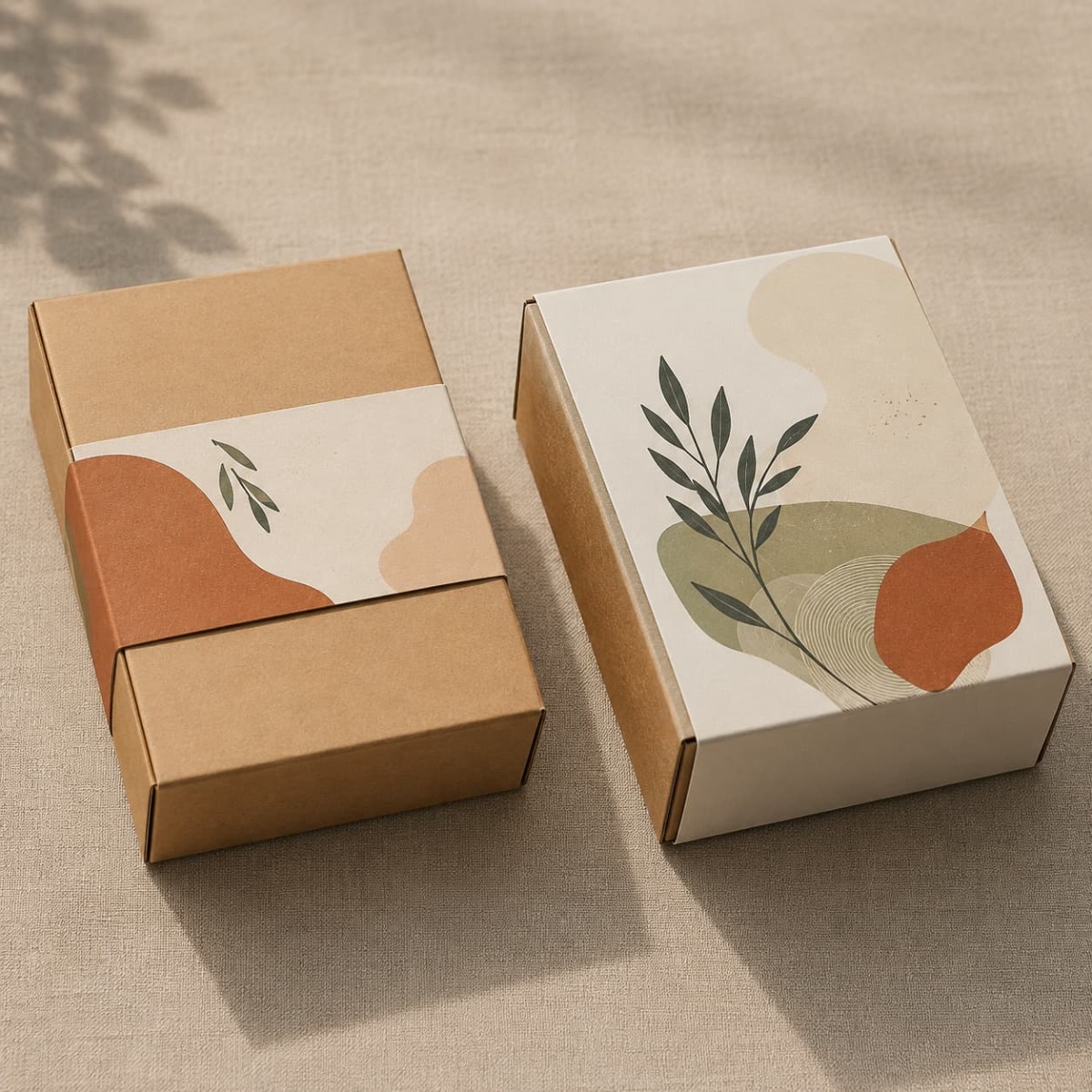
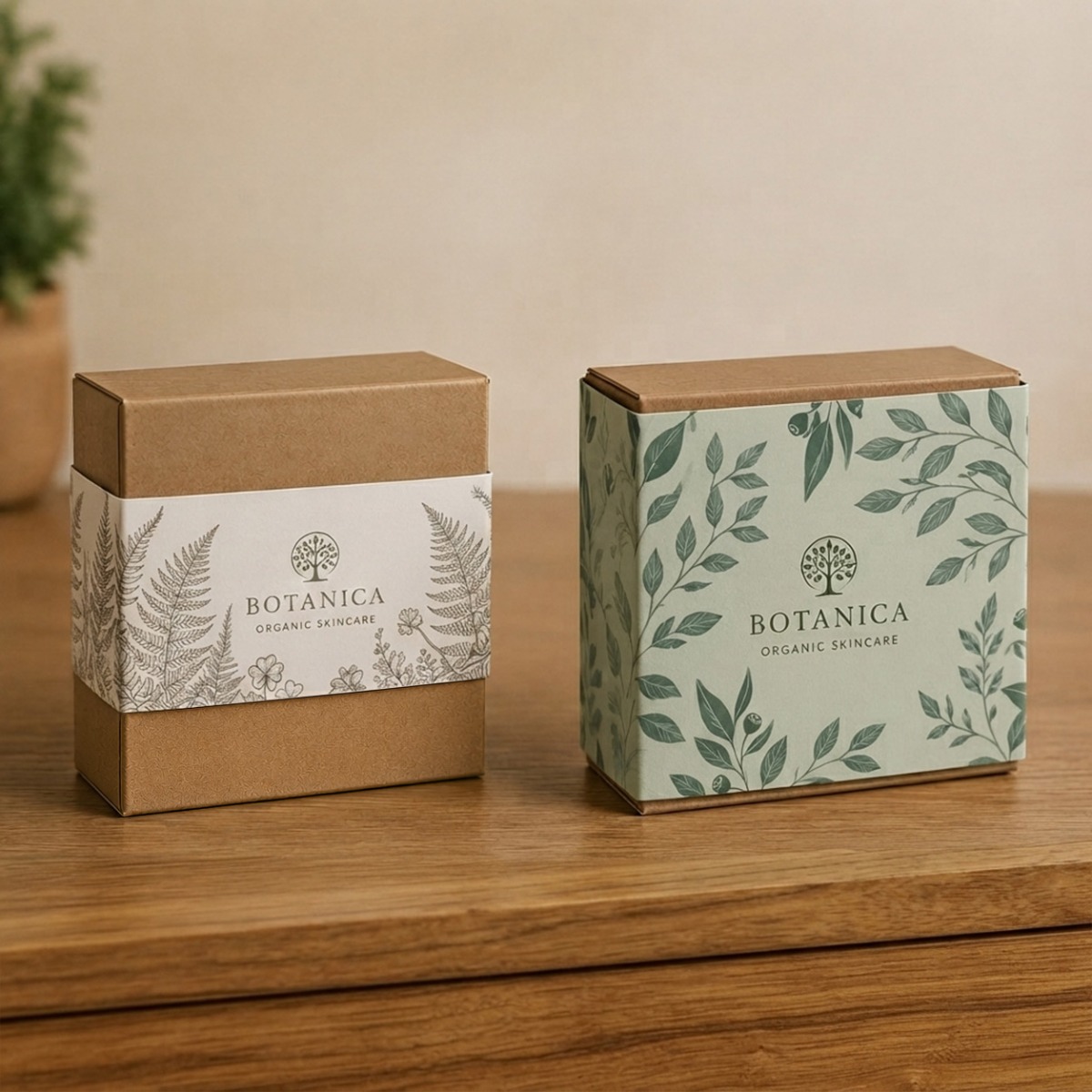
If you're comparing belly bands and box sleeves, you've probably already got a plain box, jar, or bundle that needs branding — the question is how much of it you want covered, and what you're willing to spend to cover it. Both are printed paper wraps. Both let you update your design without reordering a fully custom box. The difference comes down to coverage: a belly band wraps part of the product, while a box sleeve wraps all of it.
This guide breaks down cost, material use, branding space, sustainability, and how each performs across soap, candles, cosmetics, food, books, subscription boxes, apparel, and gift packaging — so you can pick the right wrap the first time.
Jump to the quick decision guideCompare the Two Products
Start your order directly from here, or keep reading for the full breakdown below.
Belly Bands vs. Box Sleeves: Side-by-Side
A quick reference for coverage, cost, material use, and branding space.
| Feature | Belly Band | Box Sleeve |
|---|---|---|
| Coverage | Partial | Full box surface |
| Material Use | Lower | Higher |
| Relative Cost | Lower per unit | Higher per unit |
| Branding Space | Limited to band's visible height | Entire visible box face |
| Sizing | Preset width × height combinations | Custom to your box's W × H × D |
| Paper Stock | 100lb Gloss or 100lb Matte Text (Gloss/Matte AQ) | 18pt and 24pt |
| Printing Sides | Single-sided | Single-sided |
| Closure | Adhesive tape or without adhesive | Slides over box (no separate closure) |
| Order Quantity | 250–2,500 units | 250–10,000 units |
| Turnaround | 4–5 business days after file approval | 10–15 business days after file approval |
| Recyclability | Paper-based, recyclable | Paper-based, recyclable |
| Best For | Accent branding, seasonal swaps, multi-SKU variants | Fully finished retail presentation, plain boxes |
| Reprint Speed | Fast, low-cost reprints | Slower, higher-cost reprints |
Exact pricing depends on quantity, stock, and finish. Use the belly band configurator or the box sleeve configurator for instant quotes.
Cost Comparison: Why Sleeves Cost More
The cost gap isn't arbitrary — it comes down to how much paper each wrap actually uses.
A belly band only needs enough paper to cover part of one dimension of your product — its circumference at a given height. A box sleeve needs enough paper to wrap the box's full perimeter at its full height, plus the overlap needed to close it. On most boxes, that's several times the paper area of a belly band, which is the single biggest driver of the price difference — not the printing itself.
That extra paper also means more weight per unit, which affects shipping cost at scale, and a sleeve sized to one specific box can't be reused across different box dimensions the way a belly band can flex across product variants.
Where the cost gap matters most:
- Soap & candles: small surface area, so the cost gap between the two is smaller — either can work on a tight budget.
- Subscription boxes: frequent redesigns mean a belly band's lower reprint cost adds up fast over a year of monthly boxes.
- Food packaging: high-volume, price-sensitive categories usually favor the lower material cost of a belly band.
- Books: a full sleeve isn't standard here at all — belly bands are the norm for promotional cover bands.
- Gift sets & cosmetics: the cost gap is worth paying when full coverage meaningfully lifts perceived value.
Branding Comparison
Coverage isn't just a cost question — it changes how your branding actually reads on shelf.
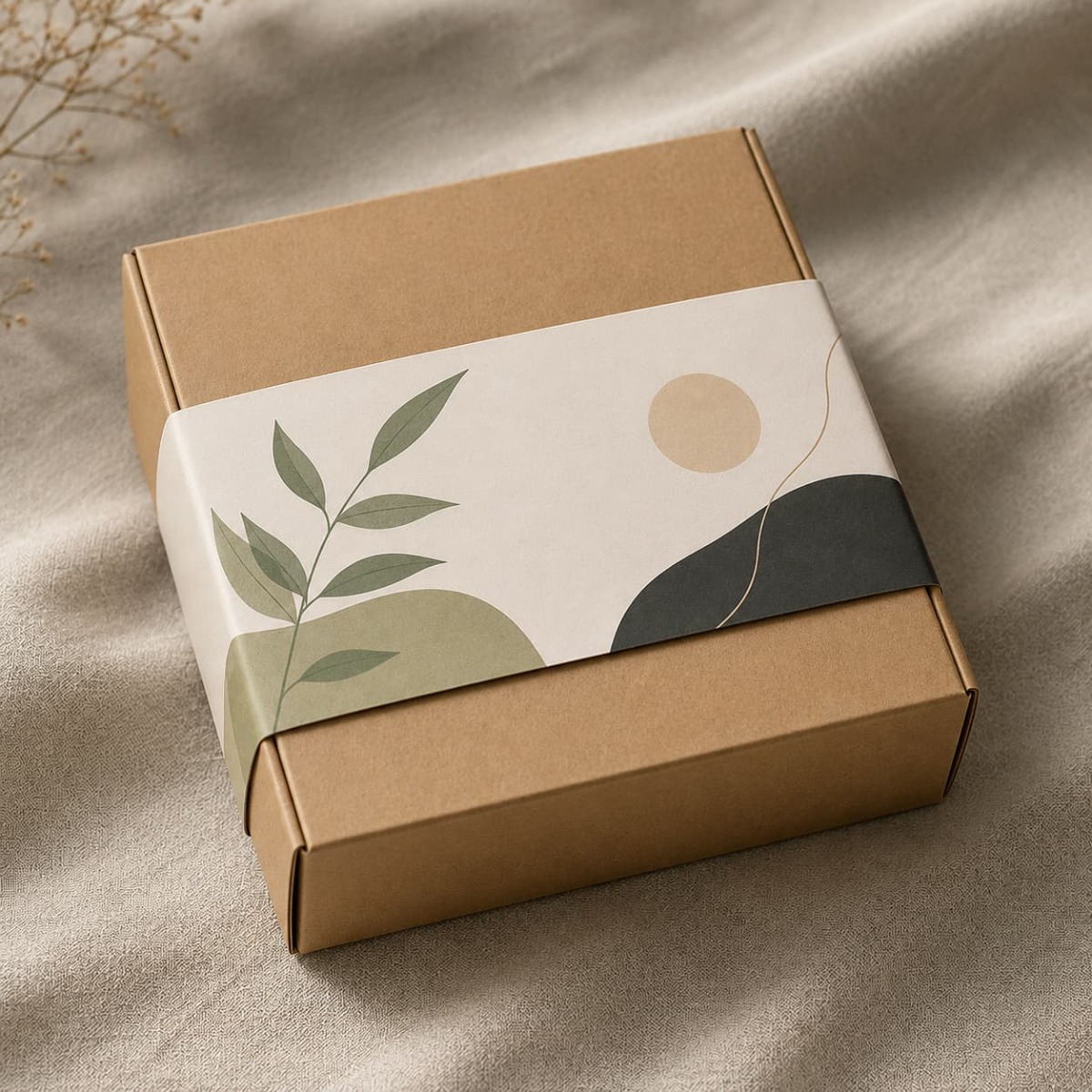
A belly band puts your logo and key message on a narrow, high-visibility strip — great for a single strong callout (a promotion, a flavor, a "new" flag) but limited space for anything more. A box sleeve turns the entire box face into printable space, so it can carry a full brand story: logo, product description, imagery, and a barcode, all in one continuous layout.
For seasonal campaigns, a belly band's lower cost and fast reprint make it easy to swap messaging every few months without reordering boxes. For shelf impact — especially in a crowded retail aisle — a box sleeve's full-coverage design tends to stand out more, since there's no plain cardboard showing through.
For product storytelling (ingredients, brand history, usage instructions), the larger canvas of a sleeve gives you room to say more without shrinking type to fit. A belly band works better paired with a design that's already legible on the box underneath — it's an accent, not the whole story.
Which Packaging Wrap Is Right for You?
The right choice usually comes down to three things: how much of the package you want covered, how much branding space you need, and how much material you want to use.
| Feature | Belly Band | Box Sleeve |
|---|---|---|
| Lower Cost | ✓ | |
| Covers Entire Box | ✓ | |
| Maximum Branding Area | ✓ | |
| Seasonal / Promotional Swaps | ✓ | |
| Retail Shelf Impact | ✓ | |
| Lower Material Usage | ✓ | |
| Fits Multiple Product Variants | ✓ |
Belly Band
Learn more about Belly BandsMost Ordered For
- Soap and candle branding
- Subscription box variety
- Seasonal and limited-edition designs
- Apparel and towel packaging
Not Ideal For
- Plain boxes that need full coverage
- Maximum artwork/branding space
- Non-preset dimensions
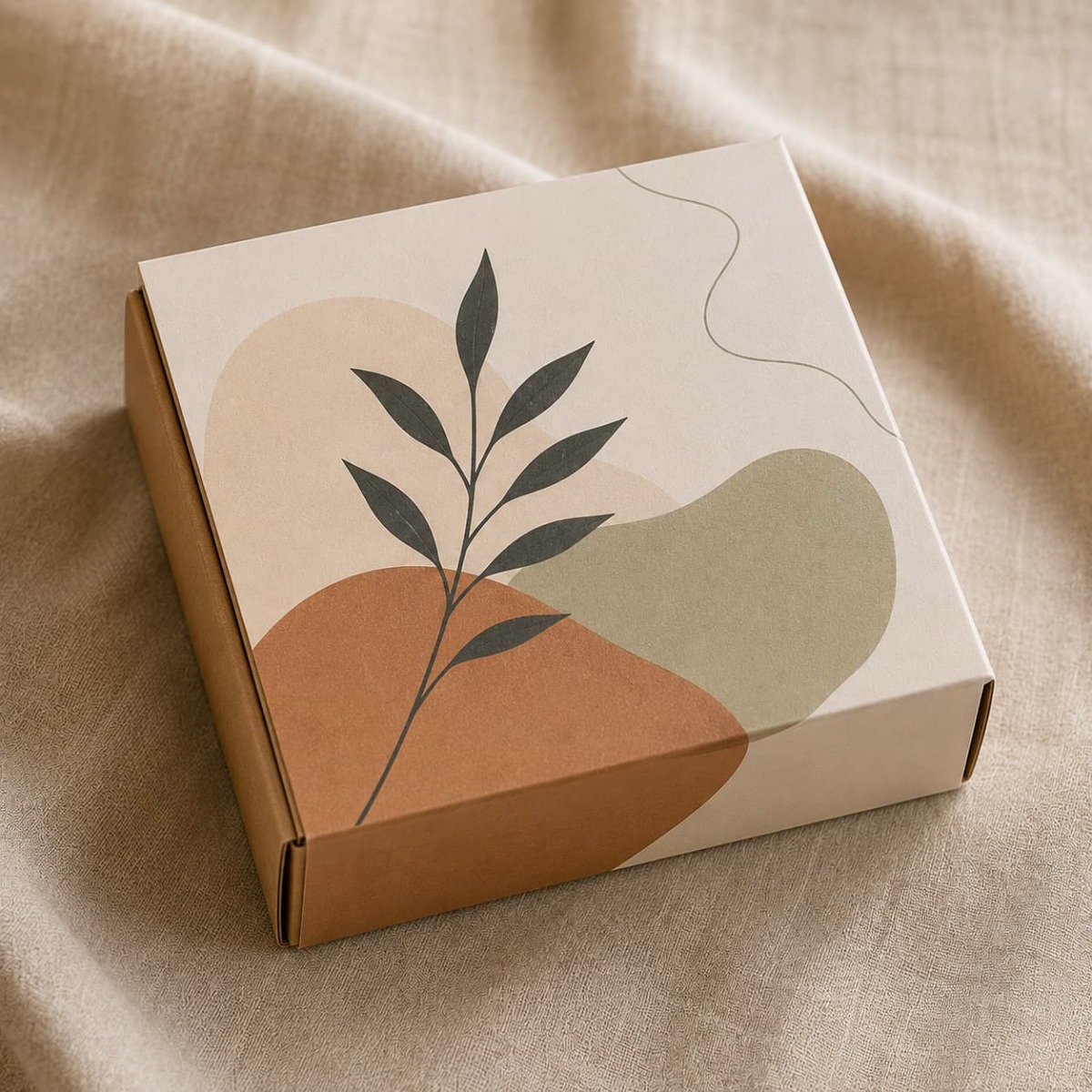
Box Sleeve
Learn more about Box SleevesMost Ordered For
- Plain kraft or corrugated boxes
- Premium gift sets
- Full-coverage retail presentation
- Products needing maximum copy/artwork space
Not Ideal For
- Tight budgets or very high-volume runs
- Frequent seasonal redesigns
- Boxes that already look retail-ready
Expert Recommendation
If we were packaging these products ourselves, we'd recommend:
- Handmade soap Belly Band
- Boxed candles Belly Band or Sleeve
- Cosmetics gift sets Box Sleeve
- Bakery / food boxes Belly Band
- Book promotions Belly Band
- Subscription boxes Belly Band
Still not sure which wrap is right for your product?
Our packaging specialists can recommend the most cost-effective option based on your box, budget, and branding goals.
Talk to a Packaging Expert Get an Instant QuoteHow They're Measured
Belly bands and box sleeves are sized in fundamentally different ways.
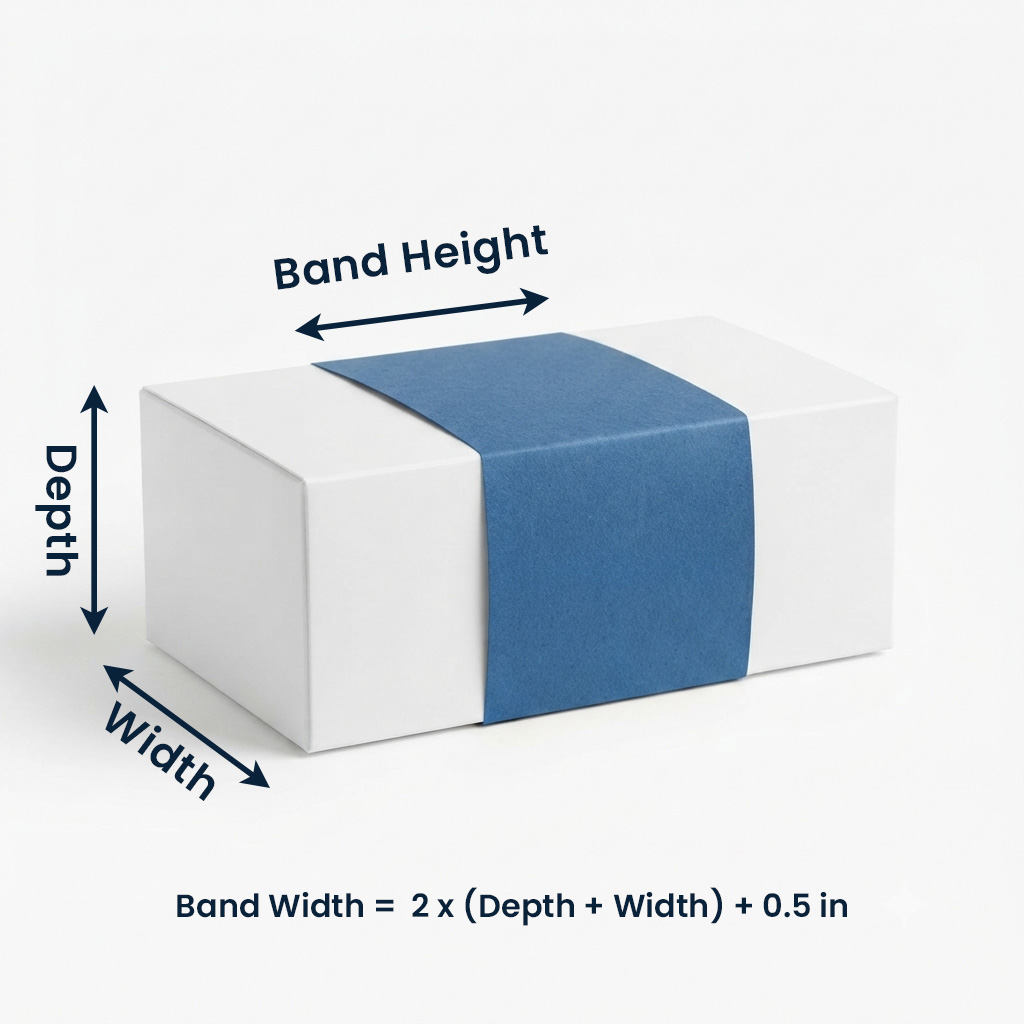
Belly Band: Width × Height
A belly band is chosen by two measurements: the width (the distance around the product) and the height (how tall the visible band should be). Our configurator offers preset combinations from 4" to 25" wide and 2" to 7" tall — pick the closest match to your product's circumference, and add a small allowance for the adhesive overlap.
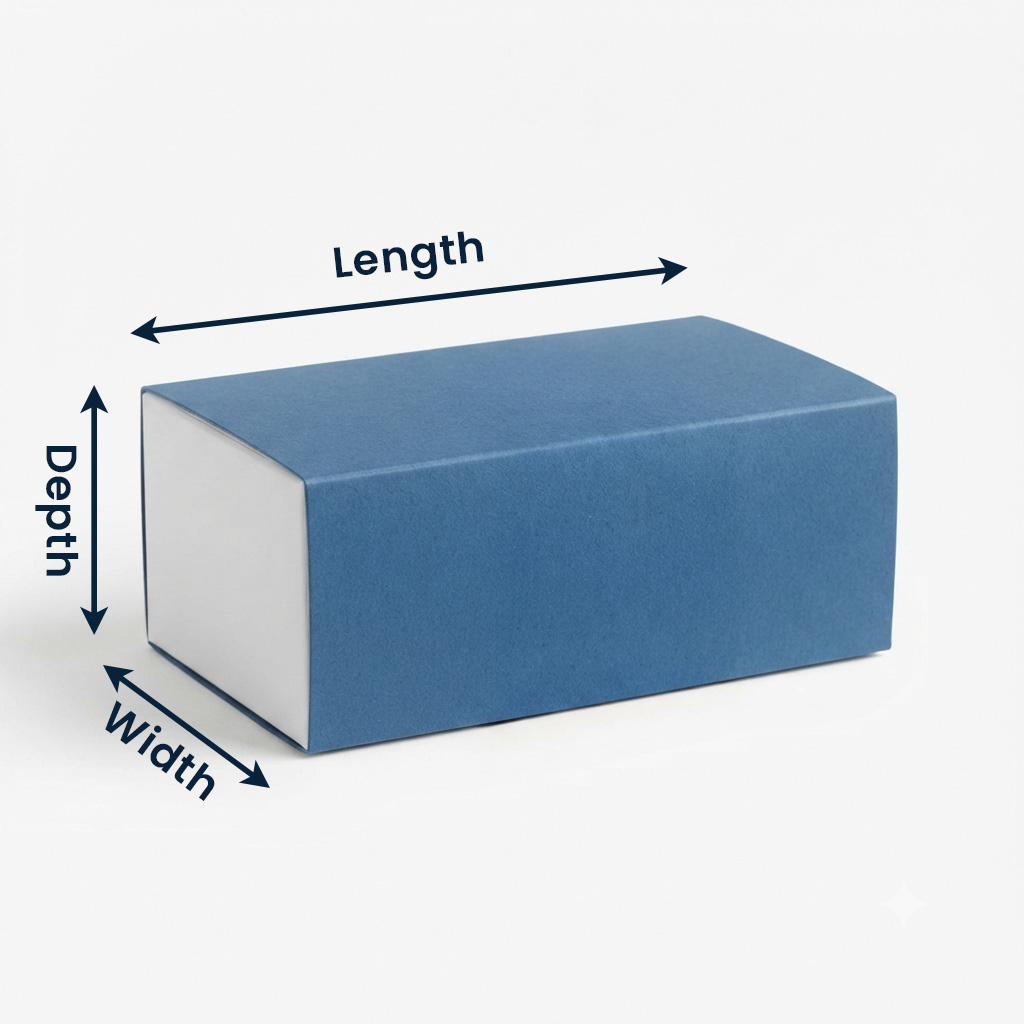
Box Sleeve: Width × Height × Depth
A box sleeve is built from a tube dieline based on your box's three dimensions, so it slides over the box as a continuous wrap.
- Length: 2 – 12 in
- Width: 0.5 – 6 in
- Depth: 2 – 10 in
Materials, Printing & Finishing Options
What each wrap is printed on, and how that affects the finished look.
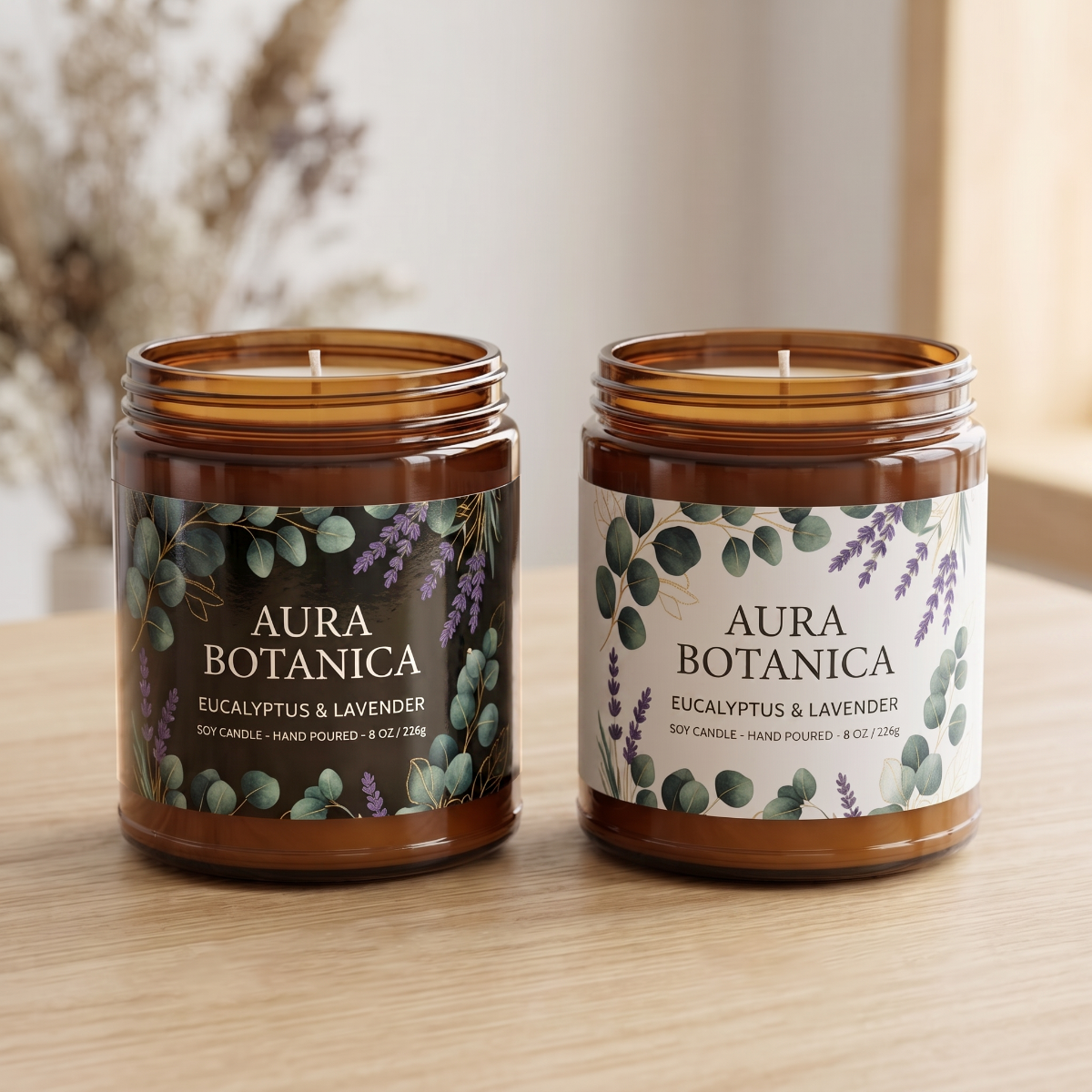
Belly Band Stocks
Belly bands are currently available in two coated stocks:
- 100lb Gloss Text with Gloss AQ — bright, vibrant sheen
- 100lb Matte Text with Matte AQ — smooth, non-glare finish
Printing is currently single-sided. Bands close with adhesive tape or without, depending on your preference.
See belly band specs →
Box Sleeve Stocks
Box sleeves are printed on solid bleached sulfate (SBS) board for structural rigidity and a clean retail finish:
- 18pt SBS — lighter weight, cost-efficient for standard retail
- 24pt SBS — heavier, more rigid feel for premium presentation
Finishing options:
- Semi-Gloss AQ
- Matte Lamination
- Gloss Lamination
- Soft Touch Lamination
Because a sleeve covers the full box, stock weight and finish choice affect both structural feel and cost more than they do on a belly band.
See box sleeve specs →Material Usage
Beyond the paper itself — how coverage affects weight, storage, and shipping.

Paper Consumption
A belly band uses a fraction of the paper a sleeve does, since it covers only part of one dimension of the product instead of the box's full perimeter and height.
Storage & Shipping
Lighter, thinner belly bands take up less warehouse space and add less shipping weight per case than full sleeves — worth factoring in at high volume.

Waste Reduction
Because belly bands reprint cheaply, brands can order smaller batches more often instead of over-ordering a large run of one design — reducing unused inventory waste.
Belly Bands vs. Box Sleeves by Industry
How brands in each category typically choose between the two.

Soap
- Handmade and artisan soap bars
- Simple wrapped or boxed soap

Candles
- Jars and boxed candles
- Plain boxes needing full coverage

Cosmetics
- Skincare and beauty gift sets
- Full-coverage unboxing experiences

Food Packaging
- Bakery and chocolate boxes
- Specialty tea and gourmet foods

Books
- Promotional bands on covers
- Bookstore and publisher displays
Subscription Boxes
- Monthly variety without redesigning the box
- Fully custom seasonal editions
Apparel
- Shirts, socks, and folded garments
- Premium cotton guest towels

Gift Packaging
- Holiday, wedding, and corporate gifts
- High-end gift sets

Coffee
- Bagged and boxed coffee
- Seasonal roast branding

Electronics
- Accessory and small electronics boxes
- Full-coverage retail packaging
Belly Bands vs. Custom Printed Boxes
Where wraps fit next to a fully custom box.
A custom printed box is manufactured and printed as a single unit — the branding is part of the box itself. That gives you full control over structure and finish, but it means reordering the entire box every time a design changes, and it typically costs more upfront and per unit than a wrap.
Belly bands and box sleeves solve this differently: they let you keep a standard box in inventory and change only the printed wrap. A belly band is the cheaper, lower-material way to do this; a box sleeve gets you closer to the look of a fully custom box while still keeping the underlying box standard and swappable.
If you're ordering the same design at high volume long-term, a custom printed box may be more cost-effective per unit. If you need flexibility — seasonal designs, multiple SKUs, or frequent updates — a wrap is usually the better economic choice.
Sustainability
Both wraps are paper-based and easier to recycle than plastic packaging alternatives — but they aren't identical on material use.
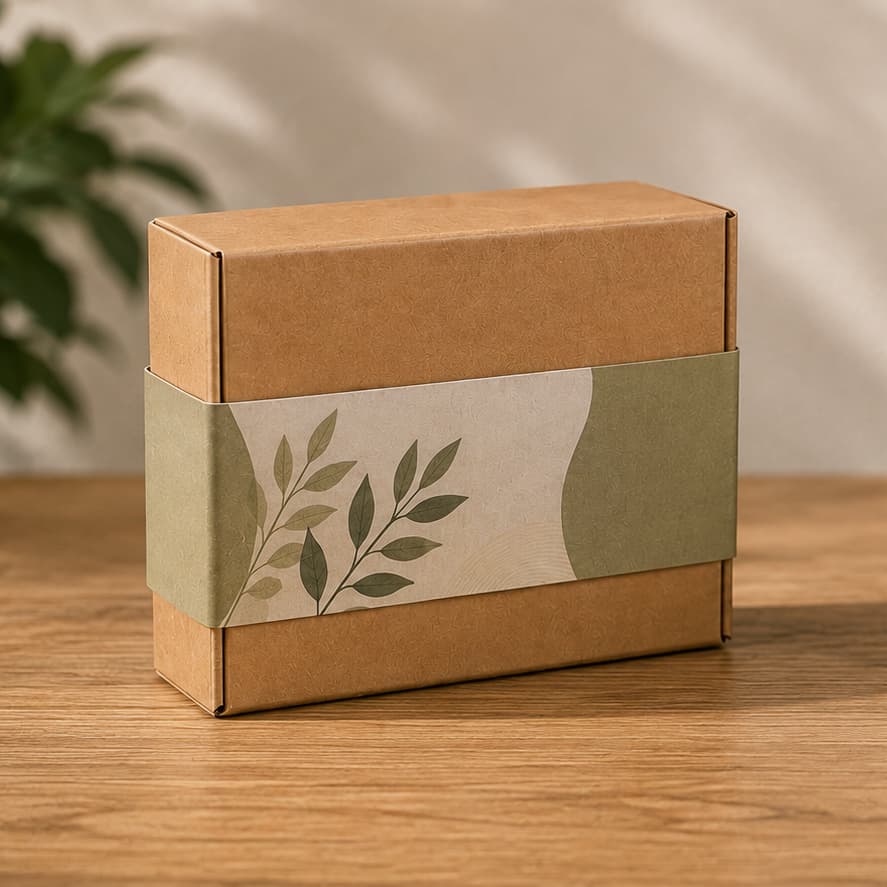
Belly Bands
Because a belly band covers only part of the product, it uses meaningfully less paper per unit than a full sleeve — a straightforward material-use advantage for high-volume runs.
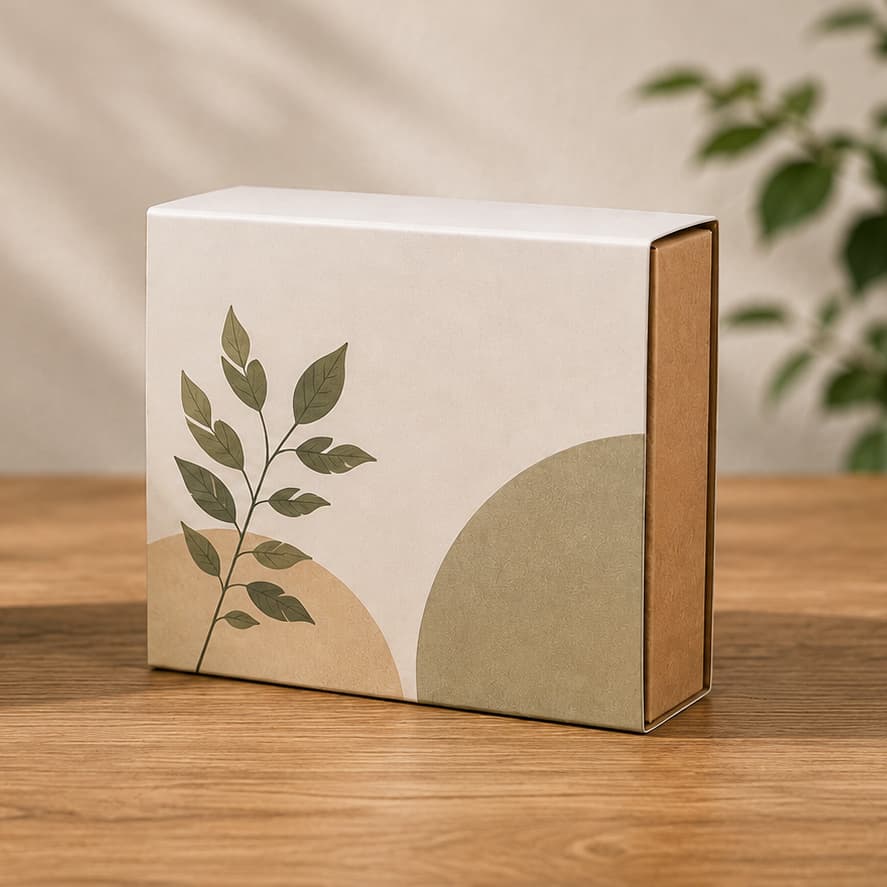
Box Sleeves
A box sleeve uses more paper since it covers the entire box, but it can sometimes replace the need for a separately printed box liner or additional packaging layer — worth weighing against your full packaging stack, not just the wrap alone.
Design Tips & Common Mistakes
A few things worth getting right before you upload your artwork.
Measure before you design
Measure your product's actual circumference (for a belly band) or your box's width, height, and depth (for a sleeve) before you start designing — not after. Fitting artwork to the wrong size is the most common (and most avoidable) reprint.
Don't center critical text on a seam
Wraps close with an overlap or seam. Keep logos, key copy, and barcodes away from that edge so nothing gets hidden or cut off when the band or sleeve is applied.
Match your stock to your finish goal
Gloss stock makes colors and photography pop; matte reads as understated and premium. Pick based on what your brand and product photography actually need, not just personal preference.
Submit print-ready PDFs
Set your file up at the exact selected dimensions, in CMYK, with fonts embedded or outlined. A mismatched file size is one of the most common causes of delayed approval.
Don't assume "close enough" on preset sizes
For belly bands especially, pick the preset size closest to your actual product circumference — a band that's noticeably too loose or too tight looks unfinished no matter how good the artwork is.
Order a sample before a full run
If you're unsure how a design will look wrapped around your actual product, order a smaller run first rather than committing your full quantity to an unproven design.
Choosing the Right Packaging Wrap
Answering it from the buyer's side, not the sales pitch.
"My box is already printed — should I use a belly band?" Usually yes. A belly band adds an accent, a promotion, or seasonal variation on top of a box that's already doing its job.
"I have plain kraft boxes — do I need a sleeve?" If the box needs to look fully finished on the shelf, a sleeve gets you there without redesigning the box itself.
"Which is cheaper for seasonal packaging?" A belly band, in almost every case — lower material use and a lower per-unit cost make it the more economical choice for anything you plan to redesign often.
"Can I switch designs without changing my boxes?" Yes with a belly band, since it sits on top of your existing box. A sleeve needs to be sized to your box's dimensions, so switching designs is easier than switching box sizes, but it's a bigger reprint than a belly band.
"Which gives the best shelf impact?" A box sleeve, since it covers the full visible surface — if shelf presence is the priority and budget allows, that's the wrap built for it.
"I have 20 SKUs to brand — which makes sense?" Belly bands. Reprinting a band per SKU is far cheaper than reprinting a full sleeve per SKU, and preset sizing means you're not paying for a new dieline each time.
"I only sell one product — does it matter which I pick?" Not as much. With a single SKU, either works — the choice comes down to budget and how much of the box you want covered, not SKU management.
"I'm launching a premium product — which should I use?" A box sleeve tends to read as more premium simply because there's no plain box showing through — worth the extra cost if first impression is the priority.
Frequently Asked Questions
Quick answers to the most common belly band and box sleeve questions.
No. A belly band wraps around part of a product and closes with adhesive tape. A box sleeve slides over the entire box, covering every visible face. They're both printed paper wraps, but coverage, cost, and sizing are different.
Generally yes. A box sleeve uses more material because it covers the full box, so it typically costs more per unit than a belly band, which only wraps part of the product.
It depends on the product. A box sleeve suits a fully branded unboxing experience for gift sets, while a belly band works well for accenting existing cosmetics packaging without a full redesign.
A belly band is common for bakery and gourmet food boxes since it adds a branded accent without covering the whole box. If the band will directly contact food, ask about a food-safe coating.
Yes, belly bands are paper-based and recyclable, and generally easier to recycle than plastic packaging alternatives.
Belly bands are currently available in 100lb Gloss Text with Gloss AQ or 100lb Matte Text with Matte AQ, both coated stocks suited to crisp, vibrant printing.
Belly bands are offered in preset width and height combinations rather than fully custom sizes. Box sleeves are sized to your box's specific width, height, and depth. Contact us if you need help matching a size to your product.
You can choose either "with adhesive tape" for a peel-and-press closure, or "without adhesive tape" if you're applying your own adhesive or a different closure method.
We recommend ordering a smaller quantity first if you're unsure how a design will look on your actual product, especially for a first-time design or a new size.
PDF is currently the only accepted upload format for belly bands. Make sure your file matches your selected size exactly, and reach out if you need help preparing it.
Belly bands are generally the better wholesale fit when you're running high volumes of one box style with variable branding, since they cost less per unit and reprint quickly. Box sleeves make sense wholesale when full-coverage retail presentation is the priority.
Belly bands currently come with a Gloss AQ or Matte AQ coating rather than a separate laminate film. If you need true lamination or another specialty finish, contact our team to confirm what's available for your project.
Specialty finishes such as embossing, debossing, foil stamping, and spot UV are available for box sleeves on a custom quote basis — contact us to discuss your finish requirements and we'll confirm availability and pricing for your project.
Both are paper-based and recyclable, but a belly band uses less paper per unit since it only covers part of the box — a straightforward material-use advantage if sustainability is a priority.
Belly bands are printed on 100lb text stock in either Gloss or Matte finish — a good balance of durability and flexibility for wrapping most products.
Interior printing on box sleeves is available as a custom option — reach out with a quote request and we'll confirm what's possible for your specific sleeve dimensions and print requirements.
A box sleeve is built from your box's exact width, height, and depth, so it can be sized to fit an existing box — just have those three measurements ready before you start your order.
Ready to Design Your Packaging Wrap?
Belly band or box sleeve — get instant wholesale pricing and start your order today.